In China, handwriting is not merely communication — it is art. Chinese calligraphy (书法, shūfǎ, literally "the way of writing") has been practiced for over 3,000 years and is considered the highest visual art form in Chinese culture, ranked above painting and sculpture. A single brushstroke can reveal a person's education, character, and emotional state. UNESCO recognized Chinese calligraphy as Intangible Cultural Heritage in 2009.
The Five Classical Styles
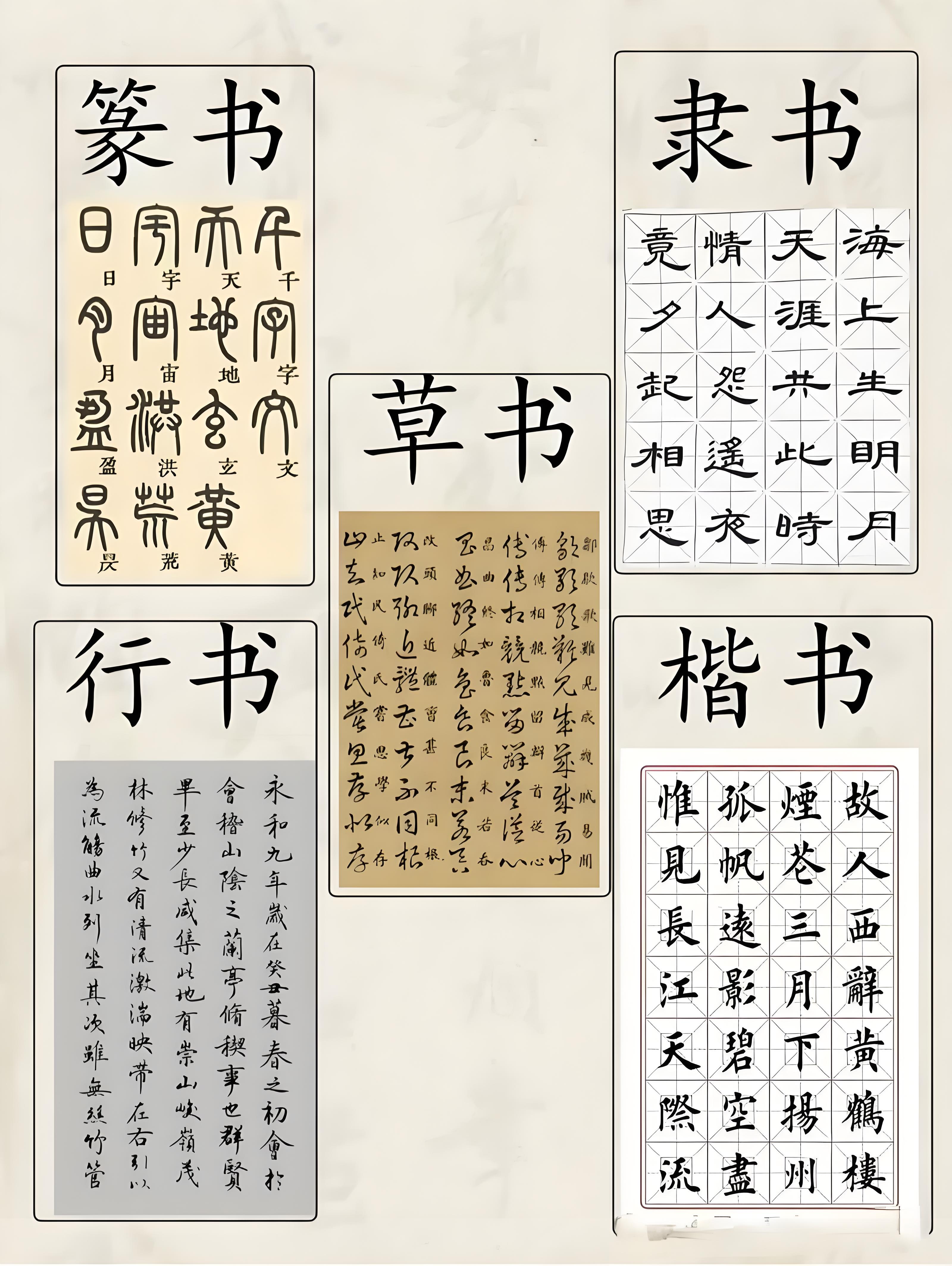
Chinese calligraphy evolved through thousands of years into five major styles, each with its own rules, aesthetic, and era of dominance:
| Style | Chinese | Pinyin | Era | Character |
|---|---|---|---|---|
| Seal Script | 篆书 | Zhuànshū | Pre-Qin to Qin Dynasty (before 206 BCE) | The oldest formal script; rounded, symmetrical strokes based on ancient bronze inscriptions. |
| Clerical Script | 隶书 | Lìshū | Han Dynasty (206 BCE – 220 CE) | Wider, flatter characters with a distinctive "silkworm head and wild goose tail" stroke ending. |
| Regular Script | 楷书 | Kǎishū | Wei-Jin dynasties onward | The foundation of modern printed Chinese; every stroke precise and clearly separated. Beginners always start here. |
| Running Script | 行书 | Xíngshū | Han Dynasty, popular through Tang | Semi-cursive; strokes connect fluidly. Used for everyday elegant writing. Wang Xizhi's masterpiece is in this style. |
| Cursive Script | 草书 | Cǎoshū | Han Dynasty onward | Highly abbreviated, strokes merge into sweeping flows. Resembles abstract art to the untrained eye. |
Iconic Characters — What Calligraphers Love to Write
Certain characters are beloved in calligraphy practice because their structure showcases brushstroke technique beautifully. Here are some of the most commonly written characters with their meaning and significance:
| Character | Pinyin | Meaning | Why Calligraphers Love It |
|---|---|---|---|
| 永 | Yǒng | Eternal / Forever | Contains all eight fundamental brushstrokes (永字八法). Every calligraphy student writes this character thousands of times. |
| 福 | Fú | Good Fortune / Blessing | The most iconic Chinese character; posted upside-down at New Year to invite luck "in". Rich in visual balance. |
| 寿 | Shòu | Longevity / Long Life | Over 100 artistic variations exist. A gift of this character written by a master is considered the highest honor. |
| 雅 | Yǎ | Elegance / Refinement | Represents the aesthetic ideal of Chinese literati culture; beloved for its graceful horizontal composition. |
| 龙 | Lóng | Dragon | Bold strokes; dynamic energy. Writing 龙 well requires mastery of curved, powerful brushwork. |
| 和 | Hé | Harmony / Peace | Core Confucian concept; its balanced left-right structure makes it a classic exercise in proportion. |
| 心 | Xīn | Heart / Mind | Just three strokes — yet among the hardest to write beautifully. Each dot must flow with intention. |
| 墨 | Mò | Ink | Calligraphers write this as a meditative tribute to their craft. Complex structure tests ink control. |
The Four Treasures of the Study
Traditional calligraphy requires four essential tools, collectively called 文房四宝 (Wénfáng Sìbǎo) — the Four Treasures of the Scholar's Studio:
- 笔 (Bǐ) — Brush: Made from animal hair (rabbit, goat, horse, or wolf), set into a bamboo handle. Different hair types produce different stroke qualities — soft goat hair for flowing regular script, springy wolf hair for powerful cursive.
- 墨 (Mò) — Ink Stick: Ground on an inkstone with water to produce ink. Traditional ink sticks are made from pine soot or lampblack mixed with hide glue, often pressed into decorative shapes and perfumed.
- 纸 (Zhǐ) — Paper: Xuan paper (宣纸, xuān zhǐ), made in Anhui province, is the gold standard — thin yet strong, with a texture that absorbs ink beautifully and resists yellowing for centuries.
- 砚 (Yàn) — Inkstone: A flat stone palette for grinding the ink stick with water. The Duan inkstone (端砚) from Guangdong and She inkstone (歙砚) from Anhui are the most prized, sometimes worth more than gold.
The Grand Masters of Chinese Calligraphy
| Master | Chinese | Dynasty | Legacy |
|---|---|---|---|
| Wang Xizhi | 王羲之 | Eastern Jin (317–420 CE) | Called the "Sage of Calligraphy" (书圣). His Preface to the Orchid Pavilion (兰亭序) is considered the greatest running-script work ever written. The original was said to be buried with Emperor Taizong of Tang — only copies survive. |
| Yan Zhenqing | 颜真卿 | Tang Dynasty (618–907 CE) | Revolutionized regular script with broad, powerful strokes. His style (颜体) remains one of the most copied templates for beginners today. |
| Liu Gongquan | 柳公权 | Tang Dynasty | Refined the regular script into slim, disciplined elegance (柳体). Famous saying: 'If your heart is upright, your brush will be upright.' |
| Su Shi | 苏轼 (苏东坡) | Northern Song (960–1127 CE) | Poet, painter, and calligrapher. His free-spirited running script broke Tang formalism. Wrote that 'calligraphy needs no rules — only spirit.' |
| Zhao Mengfu | 赵孟頫 | Yuan Dynasty (1271–1368 CE) | Revived classical Tang forms in a uniquely graceful synthesis. His regular script (赵体) is still one of four standard styles students learn. |
Calligraphy as Meditation — The Mental Practice
In Chinese philosophy, calligraphy is inseparable from mental cultivation. Before writing, the calligrapher is expected to still the mind, regulate breathing, and enter a state of focused presence (静心, jìngxīn). A shaking hand betrays anxiety; trembling strokes expose illness. The brush becomes a mirror for the inner state.
This is why in imperial China, calligraphy skill was a requirement for civil service examinations. Officials were judged not just on their written arguments but on the beauty of the handwriting — reflecting that good governance required a disciplined, harmonious mind.
Key Chinese Phrases for Calligraphy
| Chinese | Pinyin | Meaning |
|---|---|---|
| 书法 | Shūfǎ | Calligraphy (literally: the way/method of writing) |
| 毛笔字 | Máobǐ zì | Brush-written characters |
| 临摹 | Línmó | To copy a master's work (the study method) |
| 笔画 | Bǐhuà | Brushstroke / stroke order |
| 永字八法 | Yǒng zì bā fǎ | The Eight Methods of the Character 永 — the foundational stroke system |
| 墨迹 | Mòjì | Ink mark / traces of brushwork |
| 文房四宝 | Wénfáng sìbǎo | Four Treasures of the Studio (brush, ink, paper, inkstone) |
| 书圣 | Shūshèng | Sage of Calligraphy (Wang Xizhi's title) |
Want to practice reading Chinese characters? Start with our essential Chinese phrases guide
Frequently Asked Questions
Absolutely. Many calligraphy studios in Beijing, Shanghai, Xi'an, and other cities offer beginner classes specifically for non-Chinese learners. Online platforms also offer structured calligraphy courses. The main challenge is patience — real skill requires months of copying the same characters repeatedly, but even beginners can create beautiful art within weeks.
To write recognizable characters with good form takes about 3–6 months of regular practice. To develop a personal style recognizable to experts takes 10+ years. Most practitioners say the learning never ends — even Wang Xizhi reportedly practiced by turning an entire pond black with ink-diluted water.
Regular script (楷书, kǎishū) is universally recommended for beginners. Every stroke is separate and deliberate, allowing you to build muscle memory and understand each character's structure. Only after mastering regular script do most teachers introduce running or cursive script.
In China, calligraphy supply shops (文房四宝店) are found in every major city. Liulichang Street in Beijing is particularly famous. Internationally, Chinese cultural stores and Amazon carry basic beginner sets (brush, ink, practice paper, inkstone) for under $30.
Modern everyday handwriting uses a ballpoint or gel pen and prioritizes speed. Calligraphy uses a brush with variable pressure to create thick-and-thin strokes, and prioritizes form, structure, and aesthetic rhythm over speed. They use the same characters but are practiced as completely separate arts.
Learn the Language Behind the Art — Download FlowChinese
FlowChinese teaches you to read and speak the characters you see in calligraphy. Start with pronunciations, tones, and the stories behind Chinese characters.
🍎 Download Free on App Store